On September 15, 2025, the IRS issued final regulations for provisions in the Setting Every Community Up for Retirement covering catch-up contributions to various types of retirement plans.
For employees over age 50, who contribute to an employer-sponsored 401(k) plan, this catch-up contribution can be up to $7,500 for 2025, and $11,250 for those age 60 to 63 (150% of the catch-up amount).
Change In 2026 …
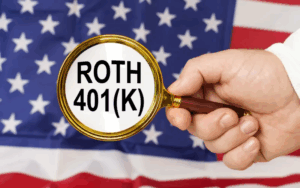
However, starting January 1, 2026, there will be changes to the manner in which these catch-up contributions can be made, if your 2025 earnings under this employer were greater than $145,000. This threshold will be indexed annually for inflation.
Going forward, such high earners will be required to make their catch-up contributions in after-tax dollars to a Roth account option within their 401(k) plan.
The problem is that employers are not required by statute, regulation, or the IRS to offer a retirement plan with a Roth option, though most now do so, and more and more 401(k) plans are incorporating Roth options. If your earnings are above the $145,000* limit for pre-tax catch-up contributions, and your 401(k) plan doesn’t have a Roth option, you won’t be able to make a catch-up contribution at all.
This change can be even more impactful if you’re turning 60, 61, 62, or 63 in 2026. If you are, then you should be eligible to make a catch-up contribution of up to $11,250 (150% of the basic catch-up contribution limit). That’s a good chunk of change to either forgo contributing to your retirement plan or to add to your taxable income.
However, there’s a catch (for the IRS, this time!) some high earners may be able to take advantage of:
The Loophole

For the purpose of determining whether your catch-up contribution has to be made to a Roth account, the IRS only takes into account your earnings with a single given employer.
Let’s say you have two sources of income, contribute to a 401(k) plan at each employer, and neither plan has a Roth option. If your income from only one of your employers is under $145,000*, you can make that tax-deferred catch-up contribution quite safely, as long as you make it to the 401(k) offered by the employer at which you earn less than the threshold.
Takeaways

Be proactive with your employer! If your 401(k) plan doesn’t offer a Roth option, ask whether they can either add one to the existing plan, or switch to a plan that does offer this option.
Monitor your sources of income, and keep track of both your aggregate earnings and the amount you earn from each source.
Consider that you may find it beneficial to pay the taxes on your catch-up contributions upfront, and get in return the tax-free growth and withdrawals a Roth account affords. Roth account owners are also exempt from taking required minimum distributions (RMDs) from Roth accounts.
*Note: the $145,000 threshold was predicated on 2024 dollar-value; this threshold will likely rise for 2026 applicability, but since the IRS has not confirmed this, we are sticking to the $145,000 figure, with this caveat.
And plan ahead!
It’s never too early to plan for your taxes, and 2026 is just around the corner.
At Rigby Financial Group, we want you to keep as much of the money you’ve earned as possible―and we’re expert tax planners!
Nothing makes us happier than finding ways to save our clients from taxes they don’t need to pay. We think you and your family should enjoy as much of your hard-earned money as the applicable tax codes (federal, state, and sometimes locality) allow for.
Come to us for tax savings! Please either call (866.690.4961 or 504.586.3050) or click here to email us directly – Rigby Financial Group’s trusted, expert team are always at your service―that’s what we are here for!
Until next time –
Peace,
Eric
Further reading:
IRS Proposes Regulations Governing Retirement Plan Catch-Up Contributions Under SECURE 2.0